
Understanding How Wood Turns Into Stone Over Millions of Years
The idea that wood—an organic, biodegradable material—can transform into solid stone may seem paradoxical at first glance. Yet, through an extraordinary natural process known as petrification, wood can undergo a complete mineral transformation while preserving its original structure in astonishing detail. This phenomenon has fascinated scientists, geologists, and collectors for centuries, offering a rare window into ancient ecosystems, prehistoric climates, and the evolution of plant life on Earth.
In this comprehensive guide, we explore how wood becomes fossilized, the precise environmental conditions required, the chemistry behind the transformation, and why this process is one of the most remarkable examples of natural preservation in geological history.
What Is Fossilized Wood (Petrified Wood)?
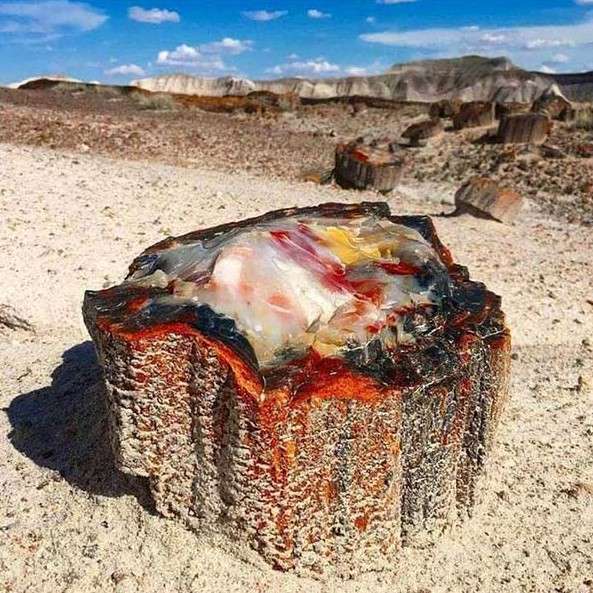
Fossilized wood, commonly referred to as petrified wood, is a type of fossil formed when plant material is buried by sediment and protected from decay due to a lack of oxygen. Over time, minerals carried by groundwater replace the original organic materials, cell by cell, turning the wood into a rock-like substance.
Unlike typical fossils that may only preserve imprints or partial structures, petrified wood retains the intricate internal anatomy of the original tree, including growth rings, bark textures, and even microscopic cellular details. The result is a stone replica of wood, often composed of minerals such as:
- Quartz (silica)
- Opal
- Calcite
- Pyrite (in rare cases)
This transformation is not merely superficial; it is a complete molecular replacement that occurs over millions of years, making petrified wood one of the most detailed fossil records available.
The Essential Conditions Required for Wood Fossilization
For wood to become fossilized instead of decaying, a highly specific set of environmental conditions must be met simultaneously. Without these factors, organic material would quickly decompose and vanish.
1. Rapid Burial in Sediment
The first critical step is rapid burial, which protects the wood from external elements. This often occurs in environments such as:
- Riverbeds and floodplains
- Volcanic ash deposits
- Mudslides or landslides
- Swampy, waterlogged terrains
Rapid burial prevents exposure to oxygen and microorganisms, effectively halting the natural decomposition process.
2. Oxygen-Deprived Environment (Anaerobic Conditions)
Oxygen is the primary driver of decay. In its absence, bacteria and fungi responsible for breaking down wood cannot survive or function efficiently. This creates an environment where the wood can remain intact long enough for mineralization to begin.
3. Mineral-Rich Groundwater
The presence of groundwater saturated with dissolved minerals is essential. As water flows through the buried wood, it carries elements such as silicon dioxide (SiO₂), which gradually infiltrate the cellular structure.
Without a consistent supply of mineral-rich water, petrification cannot occur.
4. Geological Stability Over Time
The process of fossilization is extraordinarily slow. It requires thousands to millions of years of stable conditions. Any major environmental disruption—such as erosion, tectonic activity, or exposure—can interrupt or destroy the process entirely.
The Science Behind Petrification: Permineralization Explained
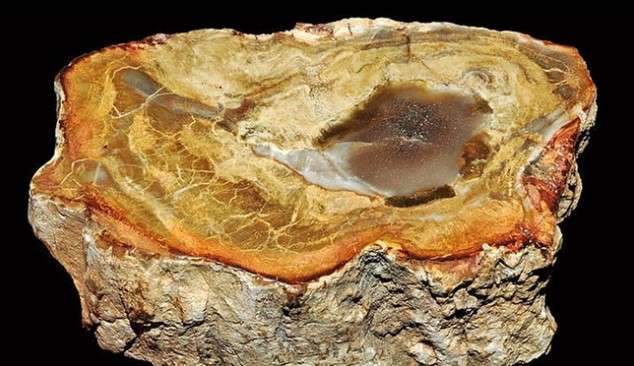
The transformation of wood into stone is driven by a process known as permineralization, one of the most important mechanisms in fossil formation.
Step-by-Step Breakdown of Permineralization
Water Infiltration
Mineral-rich groundwater penetrates the porous structure of the buried wood, entering microscopic spaces within cells.
Dissolution of Organic Material
Over time, the original organic compounds—primarily cellulose and lignin—begin to break down slowly.
Mineral Deposition
As organic materials degrade, minerals precipitate out of the water and begin to fill and replace the cellular structure.
Crystallization
The deposited minerals crystallize, forming solid structures that mimic the original wood anatomy.
Complete Replacement
Eventually, the entire piece of wood is transformed into stone, with no organic material remaining, yet retaining its original shape and fine details.
This process ensures that even microscopic features of the wood are preserved, allowing scientists to study ancient plant biology with remarkable precision.
Why Wood Can Survive Long Enough to Fossilize
Not all organic materials have the capacity to become fossils. Wood, however, possesses unique characteristics that increase its chances of preservation.
The Role of Lignin and Cellulose
Wood is primarily composed of two key substances:
- Cellulose, which is relatively easy to decompose
- Lignin, a complex polymer that is highly resistant to decay
Lignin plays a crucial role in fossilization. Its durability allows wood to withstand decomposition long enough for mineralization to occur. In environments where oxygen is limited, lignin can persist for extended periods, creating the perfect conditions for petrification.
How Long Does It Take for Wood to Become Fossilized?
The fossilization of wood is not an event—it is a geological process that unfolds over immense timescales.
- Initial mineral infiltration can begin within hundreds to thousands of years
- Significant petrification requires tens of thousands of years
- Complete transformation into stone may take millions of years
Some of the oldest known petrified wood specimens date back approximately 390 million years, offering invaluable insights into Earth’s earliest forests.
Visual and Structural Features of Petrified Wood
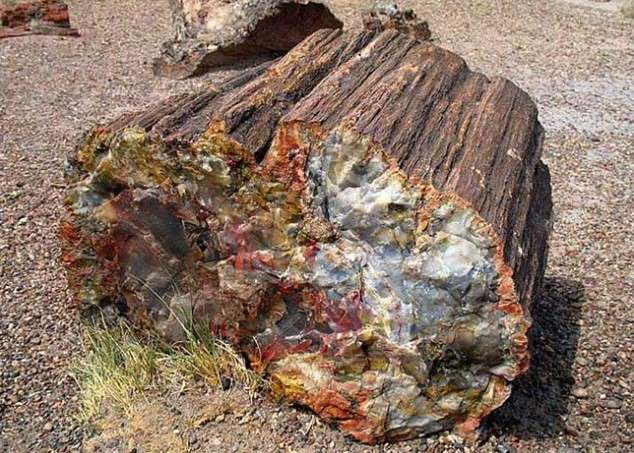
One of the most fascinating aspects of petrified wood is its visual diversity and structural integrity.
Preserved Wood Grain and Growth Rings
Despite being entirely mineralized, petrified wood often displays:
- Annual growth rings
- Tree bark patterns
- Cellular structures visible under magnification
These features allow scientists to determine the age, species, and growth conditions of ancient trees.
Vibrant Colors from Mineral Content
The striking colors seen in petrified wood are the result of trace minerals:
- Red and yellow hues from iron oxides
- Green shades from copper compounds
- Purple tones from manganese
- Black coloration from carbon or iron sulfides
These colors make petrified wood not only scientifically valuable but also highly sought after as decorative and collectible material.
Common Misconceptions About Fossilized Wood
Is Coal the Same as Fossilized Wood?
A widespread misunderstanding is that coal is simply fossilized wood. This is incorrect.
Coal forms from accumulated plant material, including mosses, ferns, and other vegetation, that undergoes compression and chemical transformation under heat and pressure. While wood can contribute to coal formation, coal does not preserve the structure of the original material, unlike petrified wood.
Does Fossilized Wood Still Contain Organic Matter?
In most cases, petrified wood contains little to no original organic material. The transformation is so complete that the specimen is essentially a mineral replica, not preserved wood in the traditional sense.
Where Is Petrified Wood Commonly Found?
Petrified wood can be discovered in various regions around the world, particularly in areas with a history of volcanic activity or sedimentary deposition. Notable environments include:
- Ancient river systems
- Volcanic ash burial sites
- Desert regions with exposed sediment layers
These locations provide the perfect combination of rapid burial, mineral-rich water, and long-term geological stability.
Scientific Importance of Fossilized Wood
The study of petrified wood plays a vital role in multiple scientific disciplines.
Reconstructing Ancient Ecosystems
By analyzing fossilized wood, researchers can determine:
- The types of trees that existed in prehistoric eras
- The structure of ancient forests
- Biodiversity patterns over time
Understanding Past Climate Conditions
Growth rings and cellular structures provide clues about:
- Seasonal variations
- Rainfall patterns
- Temperature fluctuations
This information helps scientists reconstruct Earth’s climatic history with remarkable accuracy.
Insights Into Evolutionary Biology
Petrified wood serves as a record of plant evolution, revealing how tree species adapted to changing environments over millions of years.
Why Petrified Wood Is One of Nature’s Most Extraordinary Transformations
The transformation of wood into stone is a rare convergence of biology, chemistry, and geology. It requires precise conditions, immense time, and continuous mineral interaction. The result is not merely a fossil but a perfectly preserved record of life from a distant past.
This process demonstrates how organic matter can transcend its natural limitations, becoming a permanent part of Earth’s geological archive. Each piece of petrified wood tells a story—one of survival, transformation, and the passage of time on a planetary scale.
Conclusion: The Hidden Journey from Wood to Stone
Wood can become fossilized because it undergoes a gradual mineral replacement process in oxygen-deprived environments, supported by mineral-rich groundwater and geological stability over millions of years. Through permineralization, every cell is replaced with stone while preserving the original structure in extraordinary detail.
This phenomenon is not only a testament to the complexity of natural processes but also a powerful reminder that even the most fragile materials can achieve permanence under the right conditions.