
The Hidden Frontier Beneath Our Feet
When we think of extreme exploration, our minds instinctively drift toward the vastness of outer space—a realm defined by infinite darkness, cosmic radiation, and unimaginable distances. Yet, paradoxically, one of the most hostile, mysterious, and unforgiving environments lies not millions of kilometers away, but directly beneath us: the deep ocean floor.
We have mapped distant planets with remarkable precision, sent probes beyond our solar system, and landed humans on the Moon. However, the seabed remains largely unknown, with vast regions still unexplored. This stark contrast raises a compelling question: why is exploring the seabed far more dangerous than exploring space?
The answer lies in a combination of extreme pressure, technological limitations, environmental hostility, and operational constraints that make deep-sea exploration one of the most perilous endeavors undertaken by humanity.
The Crushing Reality: Extreme Pressure at Ocean Depths
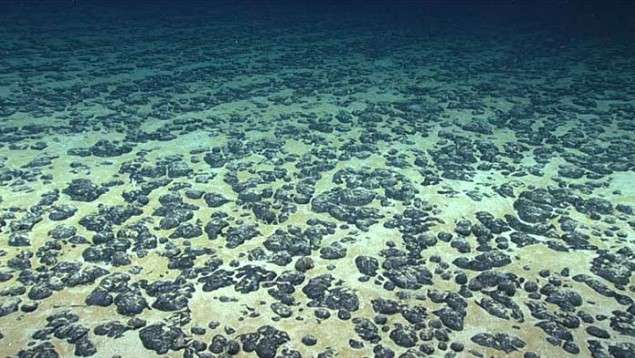
One of the most critical factors that makes seabed exploration extraordinarily dangerous is immense water pressure.
At sea level, we experience a comfortable atmospheric pressure of about 1 bar. However, for every 10 meters we descend underwater, pressure increases by approximately another bar. At depths of 4,000 meters, pressure reaches over 400 times the atmospheric pressure at the surface.
This creates a relentless compressive force capable of crushing even the most advanced submersibles in milliseconds. Unlike space—where the challenge is maintaining internal pressure against a vacuum—deep-sea vehicles must withstand constant external pressure pushing inward.
A single structural flaw, microscopic crack, or material fatigue can result in catastrophic implosion, leaving no time for reaction or recovery. This level of risk is fundamentally different from space missions, where failures often unfold over time and allow for contingency measures.
Total Darkness: A World Without Light
Beyond a depth of approximately 200 meters, sunlight fades into darkness. At greater depths, the ocean becomes a realm of absolute blackness, where no natural light penetrates.
This absence of light introduces severe limitations:
We cannot rely on visual navigation
We must depend entirely on artificial lighting systems
Visibility is restricted to only a few meters, even with powerful illumination
In contrast, space—while dark—offers relatively unobstructed visibility. Astronauts and spacecraft rely on clear line-of-sight observations, enhanced by advanced imaging technologies.
The seabed, however, is not only dark but also filled with sediment clouds, biological particles, and suspended matter, further reducing visibility and complicating navigation.
Technological Barriers: Why the Ocean Is Harder to Conquer
Despite advancements in engineering, deep-sea technology lags behind space exploration capabilities in several key areas.
Structural Engineering Challenges
Spacecraft are designed to maintain internal pressure against a vacuum, which is relatively easier to manage compared to resisting external crushing forces. Deep-sea submersibles require ultra-thick hulls, specialized materials, and precise engineering tolerances.
Even then, the margin for error remains dangerously thin.
Limited Communication Systems
Communication in space is facilitated through radio waves, which travel efficiently across vast distances. On Earth, we can communicate with spacecraft millions of kilometers away with minimal delay.
Underwater, however, radio waves are ineffective. Instead, we rely on acoustic communication (sonar), which is:
Slower
Less reliable
Limited in bandwidth
Prone to interference
This makes real-time communication extremely difficult, especially during emergencies.
Navigation Limitations
GPS systems do not function underwater. Instead, navigation relies on:
Inertial navigation systems
Sonar mapping
Pre-programmed coordinates
These systems are inherently less accurate, making precise positioning and movement far more challenging than in space.
Unpredictable Terrain: The Complex Geography of the Seafloor
Unlike the relatively predictable environment of space, the seabed is characterized by highly irregular and unpredictable terrain.
We encounter:
Deep trenches plunging thousands of meters
Underwater mountains and ridges
Volcanic vents emitting superheated fluids
Shifting sediment layers and unstable slopes
These features create a dynamic and hazardous landscape that complicates both exploration and rescue operations.
In space, objects move in predictable orbits governed by physics. On the seabed, environmental variables are constantly changing, making navigation far less predictable and significantly more dangerous.
Extreme Environmental Conditions: Cold, Isolation, and Hostility
The deep ocean is an environment of extreme cold, often hovering just above freezing temperatures. Combined with immense pressure and total darkness, it becomes one of the most inhospitable places on Earth.
We must contend with:
Near-freezing temperatures
Complete isolation from the surface
High salinity and corrosive conditions
Lack of breathable oxygen
While space is undeniably hostile, it is also a controlled environment within spacecraft. Astronauts operate within carefully regulated systems designed to maintain life-support conditions.
In contrast, deep-sea explorers operate in a setting where external conditions exert continuous, overwhelming force on both equipment and human survival systems.
Rescue and Recovery: A Near-Impossibility in the Deep Sea
Perhaps the most alarming aspect of seabed exploration is the difficulty of rescue operations.
In space missions, extensive planning ensures that astronauts have:
Emergency protocols
Backup systems
Return trajectories
Even in worst-case scenarios, rescue missions—while complex—remain feasible.
Underwater, rescue becomes exponentially more difficult due to:
Extreme depth
Communication limitations
Unknown precise location
Time constraints related to oxygen supply
Locating a lost submersible in the vast ocean is akin to finding a needle in a haystack—except the haystack is thousands of meters deep and completely dark.
Even when the location is known, deploying rescue equipment to such depths requires specialized technology that is rarely available and difficult to mobilize quickly.
Human Limitations: The Psychological and Physiological Strain
Exploring the seabed places immense strain on the human body and mind.
Psychological Pressure
We operate in confined spaces, often for extended periods, surrounded by:
Complete darkness
Total isolation
Constant awareness of extreme pressure outside
This environment can induce stress, anxiety, and psychological fatigue, even among highly trained professionals.
Physiological Risks
Unlike astronauts, who undergo extensive conditioning for microgravity, deep-sea explorers face challenges related to:
Pressure-related stress
Limited mobility
Potential equipment failure in life-support systems
The margin for survival is extremely narrow, with little room for error.
The Paradox of Exploration: Why Space Feels Safer
Despite its inherent dangers, space exploration benefits from:
Decades of technological advancement
Extensive testing and simulation capabilities
Global collaboration and funding
Predictable physical conditions
The deep ocean, on the other hand, remains largely unexplored and underfunded, with fewer missions and less technological development.
As a result, we have reached a paradoxical reality:
We have sent humans beyond Earth’s atmosphere with relative success
Yet only a handful of individuals have reached the deepest parts of the ocean
This imbalance highlights the greater inherent difficulty and danger of seabed exploration.
Limited Exploration: The Vast Unknown Beneath the Waves
One of the most compelling indicators of the ocean’s danger is how little we have explored it.
Estimates suggest that over 80% of the ocean floor remains unmapped and unexplored. In contrast, we possess detailed maps of celestial bodies such as the Moon and Mars.
This lack of exploration is not due to lack of interest, but rather the significant risks and technical challenges involved.
Every deep-sea mission represents a high-stakes operation, where failure can occur instantly and without warning.
Case Study of Risk: When Technology Meets the Abyss
Modern incidents have demonstrated the devastating consequences of deep-sea exploration failures. Submersibles operating at extreme depths face unforgiving conditions, where even cutting-edge engineering may not guarantee safety.
These events serve as stark reminders that the ocean’s depths are not just unknown—they are actively hostile, demanding absolute precision and leaving no margin for error.
Conclusion: The Ocean’s Depths—Earth’s Final and Most Dangerous Frontier
In comparing seabed exploration to space exploration, we uncover a surprising truth: the greatest dangers are not always the most distant.
The deep ocean represents a convergence of extreme pressure, technological limitation, environmental hostility, and operational complexity. It is a domain where human ingenuity is constantly tested against the raw power of nature.
While space inspires us with its vastness, the ocean challenges us with its intensity and immediacy.
As we continue to push the boundaries of exploration, one reality remains clear:
The seabed is not just another frontier—it is the most dangerous frontier we have yet to truly understand.