
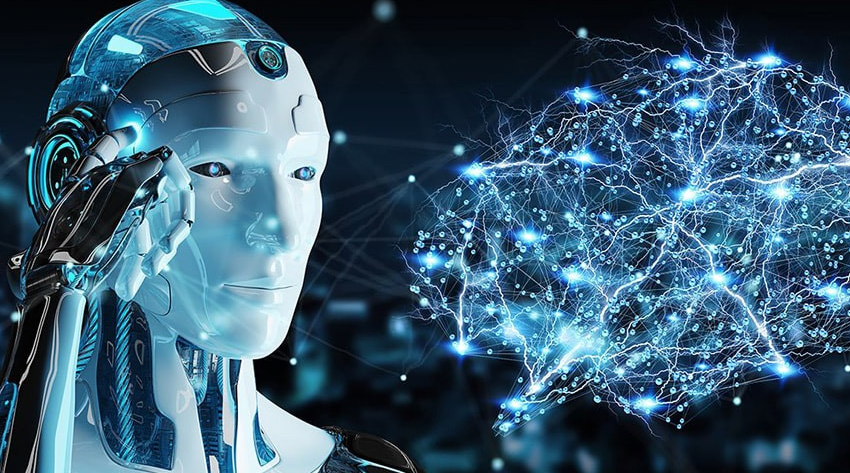
In recent years, Artificial Intelligence (AI) has become the fastest-growing technology in the history of the tech industry. From intelligent chatbots and image-generation tools to autonomous robots and massive data-analysis systems, AI is transforming the way people work, learn, and create.
Today, AI is no longer limited to laboratories or research institutions. It is now integrated into everyday life through smartphones, search engines, digital assistants, and social media platforms. Millions of people interact with AI every day, often without even realizing it.
According to many technology experts, AI is gradually becoming the “backbone” of the digital economy. Businesses and organizations around the world are integrating AI into their operations—from marketing and customer service to programming and scientific research. Companies that successfully adopt AI can improve productivity, reduce costs, and make smarter decisions based on large amounts of data.
As a result, the global race to develop and implement AI technologies is becoming more intense than ever before.
1. AI Agents – A New Leap in Artificial Intelligence
One of the most exciting technology trends today is the rise of AI Agents, also known as autonomous AI systems.
AI Agents are systems designed to operate with a high level of independence. They can:
- Make decisions based on data
- Plan and organize tasks
- Perform complex operations with minimal human supervision
Unlike traditional AI systems that simply respond to commands, AI agents can analyze situations, determine the best course of action, and execute tasks automatically.
Major technology companies such as Microsoft, Google, and Amazon are investing heavily in the development of these intelligent systems. Their goal is to create digital assistants that can handle real-world tasks such as scheduling meetings, analyzing business data, managing emails, and even coordinating with other AI systems.
In the near future, AI agents may become personal digital employees, helping individuals and businesses manage complex workflows more efficiently.
This innovation marks a significant step forward in AI evolution—moving from simple automation toward true autonomous intelligence.
2. AI Is Transforming the Entire Software Industry
Another major trend is how AI is revolutionizing software development.
Traditionally, programmers had to write thousands of lines of code manually. This process required significant time, effort, and expertise. However, with modern AI tools, the development process is becoming much faster and more efficient.
Today, developers can simply describe their ideas in natural language, and AI systems can generate functional code automatically. These systems can also:
- Detect errors in software
- Suggest improvements
- Optimize system performance
This shift is changing the role of programmers. Instead of focusing solely on writing code, developers are increasingly acting as designers and supervisors of AI-generated software systems.
Experts predict that in the near future, programming will evolve from “writing code” to “guiding AI to build software.”
This transformation brings several advantages:
- Faster software development cycles
- Lower operational costs for companies
- Increased opportunities for startups and innovation
As AI tools continue to improve, they will likely become a standard part of every developer’s toolkit.
3. The Global Race for AI Hardware
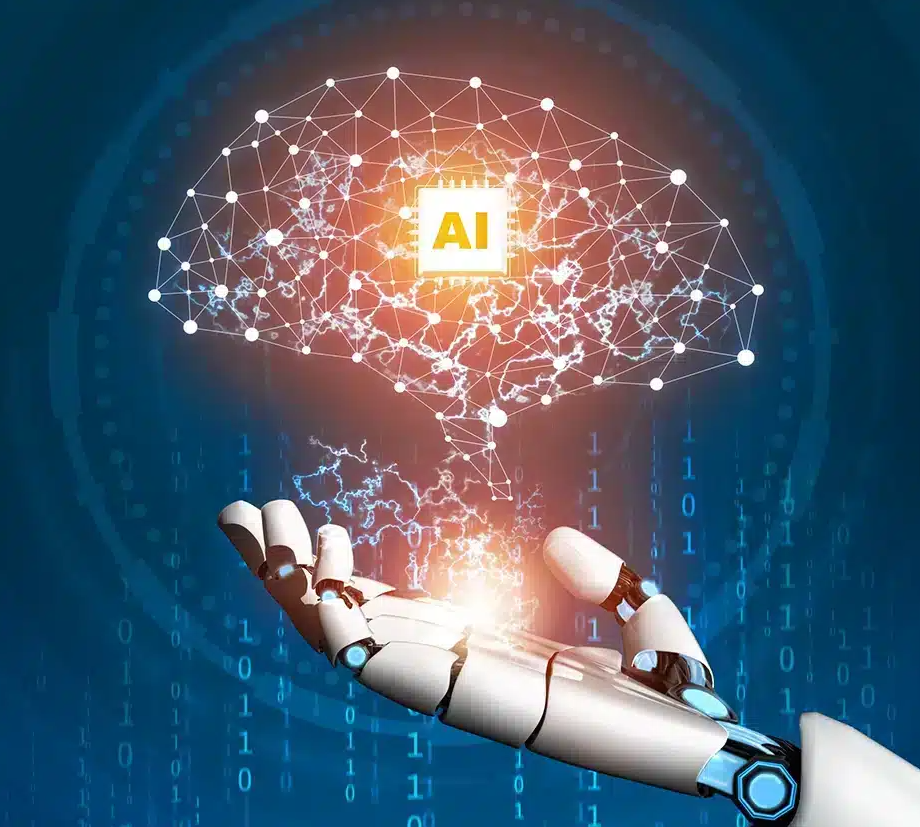
While software innovation is important, AI also requires extremely powerful hardware to function effectively. As AI models become larger and more complex, the demand for high-performance computing infrastructure continues to grow rapidly.
Technology giants are investing billions of dollars in developing specialized AI chips that can process enormous datasets and run advanced machine learning models efficiently.
Companies such as NVIDIA, Intel, and AMD are leading the development of AI processors designed specifically for deep learning and large-scale data processing.
These chips power:
- Data centers
- AI research laboratories
- Cloud computing platforms
In addition, several large technology companies are building AI supercomputers capable of training next-generation artificial intelligence models.
The race for AI hardware is becoming one of the most important competitions in the global technology industry, as computing power directly influences how advanced AI systems can become.
4. AI Combined with Future Technologies
Artificial intelligence does not evolve in isolation. Instead, it is increasingly being combined with other emerging technologies to create powerful new innovations.
Some of the most promising combinations include:
Quantum Computing
Quantum computing has the potential to revolutionize computing power. Unlike traditional computers that process data using binary bits, quantum computers use quantum bits (qubits), which allow them to perform extremely complex calculations much faster.
When combined with AI, quantum computing could significantly accelerate machine learning processes and enable scientists to solve problems that are currently impossible to compute.
Robotics
Robotics powered by AI is rapidly transforming industries such as manufacturing, healthcare, and logistics.
AI-powered robots can perform tasks with high precision and consistency. In factories, robots assemble products with incredible speed. In hospitals, robotic systems assist surgeons during delicate operations.
In the future, robots integrated with advanced AI may also help with elderly care, disaster response, and space exploration.
Spatial Computing
Spatial computing blends AI with virtual reality (VR) and augmented reality (AR) technologies. This combination creates immersive digital environments that interact with the physical world.
For example, spatial computing can be used in:
- Education and training simulations
- Remote collaboration
- Gaming and entertainment
- Architectural and engineering design
As these technologies converge, they will form a powerful ecosystem that reshapes how humans interact with digital information.
5. The Future of AI in the Next Decade
Looking ahead, experts believe that AI will become one of the most influential technologies of the 21st century.
Over the next ten years, several major changes are expected:
- AI will become a personal assistant for everyone, helping with daily tasks and decision-making.
- Many repetitive and routine jobs will be fully automated.
- Industries such as healthcare, education, transportation, and scientific research will advance significantly thanks to AI-powered systems.
For example, AI could help doctors diagnose diseases earlier, assist teachers in creating personalized learning experiences, and improve traffic systems in large cities.
However, the rapid development of AI also raises important questions about ethics, privacy, and job displacement. Governments and organizations will need to develop policies that ensure AI is used responsibly and benefits society as a whole.
Conclusion
Artificial intelligence is opening the door to a new technological era, where machines are capable of learning, reasoning, and assisting humans in nearly every field.
From AI agents and advanced AI chips to intelligent robots and quantum computing, the technological landscape is evolving faster than ever before.
One thing is becoming increasingly clear:
👉 Artificial Intelligence is the most important technology of this decade.
Businesses and individuals who understand and adopt AI early will gain a significant advantage in the rapidly growing digital economy. As AI continues to evolve, it will shape the future of innovation, productivity, and global development for many years to come.