
In 2026, the workplace is no longer defined by traditional tools and manual workflows. Instead, Artificial Intelligence (AI) has become the backbone of productivity, automation, and innovation across industries. From writing content and coding software to managing workflows and conducting deep research, AI tools are fundamentally reshaping how we work.
In this SEO-optimized guide, we’ll explore the top 10 AI tools in 2026 that are transforming modern work environments—and how you can leverage them to stay ahead of the curve.
1. ChatGPT – The Ultimate AI Productivity Assistant
ChatGPT remains one of the most powerful AI tools in 2026. It functions as a multi-purpose assistant capable of writing, coding, brainstorming, and problem-solving.
Key Features:
- Advanced reasoning and research capabilities
- Content creation (blogs, emails, scripts)
- Coding support and debugging
- Voice interaction and real-time assistance
According to recent insights, ChatGPT is widely recognized as a general-purpose AI engine that helps users complete complex tasks faster and more efficiently .
👉 Why it matters: It reduces hours of work into minutes, making it indispensable for professionals across industries.
2. Claude – Best AI for Writing and Deep Analysis
Claude, developed by Anthropic, is known for its exceptional writing quality and long-context understanding.
Key Features:
- High-quality content generation
- Deep document analysis
- Code generation and explanation
- “Artifacts” workspace for real-time collaboration
Claude excels in handling large documents and complex reasoning tasks, making it ideal for researchers, developers, and analysts .
👉 Why it matters: It improves accuracy and depth in knowledge work.
3. Google Gemini – AI Integrated Into Your Workflow
Google Gemini is deeply embedded into Google Workspace, transforming how users create documents, analyze data, and build presentations.
Key Features:
- AI-powered document creation
- Automated data analysis in Sheets
- Smart presentation generation
- Integration with Gmail and Drive
Gemini can generate full drafts and automate workflows using real user data, helping eliminate the “blank page” problem .
👉 Why it matters: It seamlessly integrates AI into everyday business tools.
4. Microsoft 365 Copilot – Enterprise AI Revolution
Microsoft 365 Copilot is redefining productivity within enterprise environments.
Key Features:
- AI-powered Word, Excel, PowerPoint
- Automation of complex workflows
- Agent-based task execution
- Integration with business data
In 2026, Copilot is evolving into agentic AI, capable of handling multi-step tasks autonomously .
👉 Why it matters: It turns software into a proactive assistant rather than a passive tool.
5. Notion AI – Smart Knowledge Management
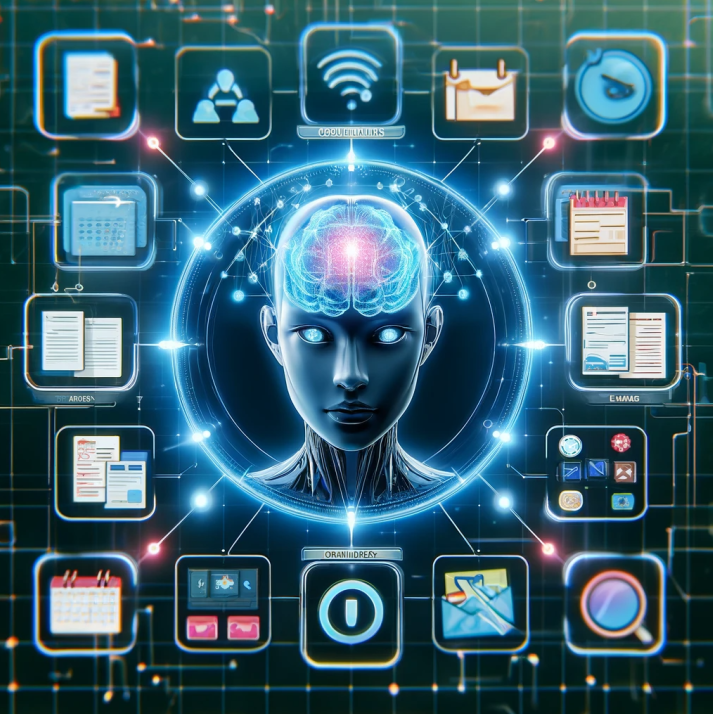
Notion AI transforms traditional note-taking into an intelligent knowledge system.
Key Features:
- AI-generated notes and summaries
- Smart task management
- Knowledge base automation
- Workflow organization
It helps teams organize and retrieve information quickly, improving collaboration and efficiency .
👉 Why it matters: It centralizes knowledge and reduces information overload.
6. Perplexity AI – The Future of Search
Perplexity AI is an AI-powered search engine that provides accurate answers with citations.
Key Features:
- Real-time research with sources
- Deep research mode
- Fast information synthesis
- Academic and professional use
It can perform multiple searches and compile detailed reports in minutes, making research significantly faster .
👉 Why it matters: It replaces traditional search engines with smarter, faster insights.
7. Zapier AI – Workflow Automation at Scale
Zapier AI is a leading automation platform that connects apps and automates repetitive tasks.
Key Features:
- No-code workflow automation
- Integration with thousands of apps
- AI-driven task execution
- Scalable business processes
Automation tools like Zapier eliminate repetitive work and improve efficiency across teams .
👉 Why it matters: It allows businesses to operate with fewer manual processes.
8. GitHub Copilot – AI for Developers
GitHub Copilot is a must-have tool for developers, acting as an AI coding assistant.
Key Features:
- Code suggestions in real-time
- Auto-complete functions
- Multi-language support
- Debugging assistance
It enables developers to write code faster and reduce errors significantly .
👉 Why it matters: It boosts developer productivity and accelerates software development.
9. Grammarly AI – Professional Communication at Scale
Grammarly AI goes beyond grammar checking by improving tone, clarity, and brand voice.
Key Features:
- Writing enhancement
- Tone detection
- Style consistency
- Business communication optimization
It ensures that all communication remains professional and effective across teams .
👉 Why it matters: It enhances communication quality in business environments.
10. Runway – AI-Powered Video Creation
Runway is transforming content creation with AI-driven video editing and generation.
Key Features:
- AI video generation
- Background removal
- Motion editing
- Creative automation
AI tools like Runway enable users to produce high-quality video content without advanced technical skills .
👉 Why it matters: It democratizes video production for creators and businesses.
How AI Tools Are Transforming Work in 2026
AI tools in 2026 are no longer just assistants—they are active collaborators. The biggest shift is the rise of:
1. AI Agents
AI can now perform multi-step tasks autonomously, not just assist with single actions .
2. Workflow Integration
AI is embedded directly into tools we already use (Google Workspace, Microsoft 365).
3. Automation at Scale
Repetitive tasks are being eliminated entirely through automation platforms.
4. Enhanced Creativity
From writing to video production, AI enhances creative output while reducing effort.
Conclusion: The Future of Work Is AI-Driven
The top AI tools in 2026 are not just improving productivity—they are redefining how work gets done. Whether you’re a freelancer, developer, marketer, or business owner, adopting these tools is no longer optional—it’s essential.
Key Takeaways:
- AI tools save time and increase efficiency
- Automation reduces manual work
- AI agents are becoming the new workforce
- Integration is the future of productivity
As AI continues to evolve, those who embrace these technologies early will gain a massive competitive advantage in the digital economy.