
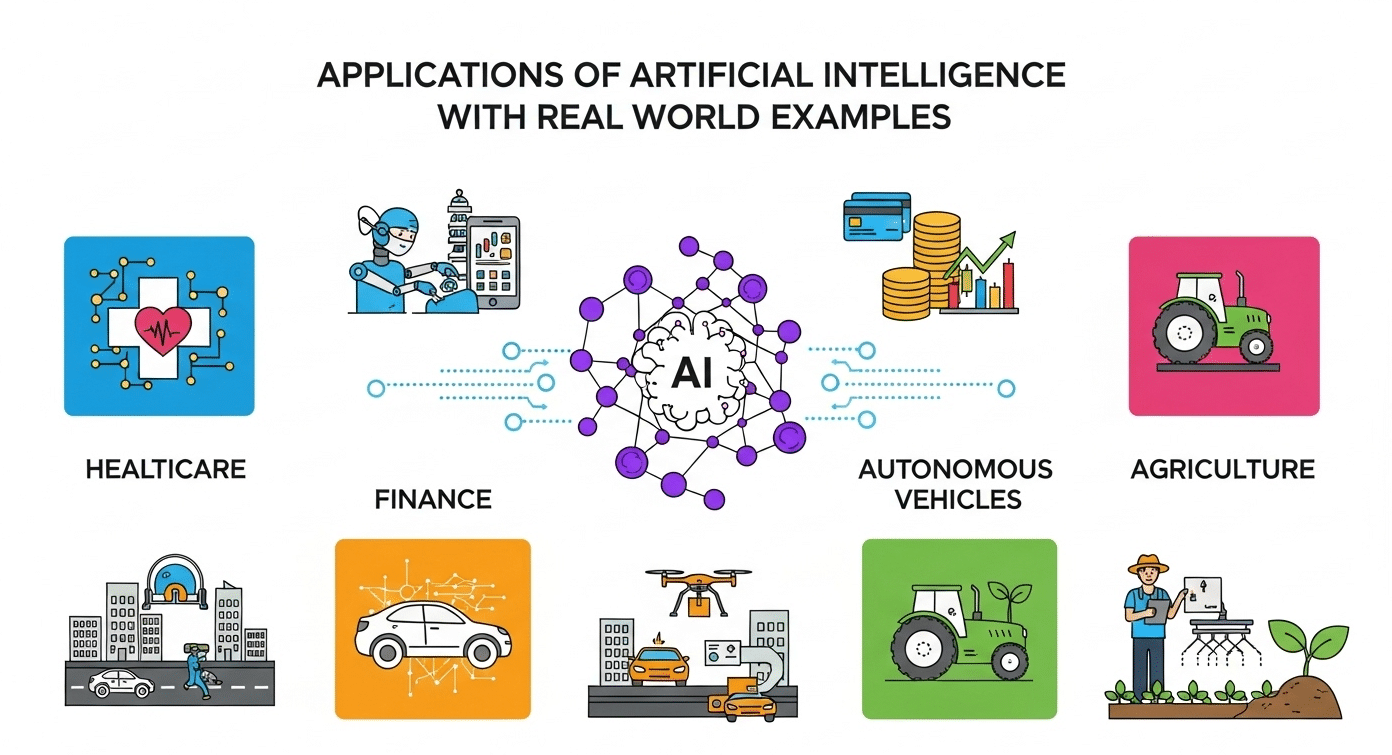
Artificial Intelligence (AI) is no longer a futuristic concept confined to science fiction. Today, it is a powerful, real-world technology that is reshaping industries, transforming daily life, and redefining how businesses operate. From healthcare and finance to marketing and transportation, AI is everywhere—and its impact is only growing.
In this comprehensive guide, we’ll explore how AI is changing the world, highlight real-life applications, and explain why understanding this technology is crucial in today’s digital era.
What Is Artificial Intelligence?
Artificial Intelligence refers to the ability of machines to simulate human intelligence, including learning, reasoning, problem-solving, and decision-making. AI systems use advanced algorithms, data, and computing power to perform tasks that traditionally required human intelligence.
There are several types of AI, including:
- Narrow AI: Designed for specific tasks (e.g., voice assistants)
- General AI: Hypothetical AI with human-level intelligence
- Machine Learning (ML): A subset of AI that learns from data
- Deep Learning: Advanced ML using neural networks
1. AI in Healthcare: Saving Lives and Improving Diagnosis
One of the most impactful applications of AI is in the healthcare industry. AI is helping doctors diagnose diseases faster and more accurately than ever before.
Key Applications:
- Medical Imaging Analysis: AI can detect diseases like cancer from X-rays and MRIs with high accuracy.
- Predictive Analytics: AI predicts patient outcomes and helps in early intervention.
- Virtual Health Assistants: Chatbots provide basic medical advice and support.
Real-Life Example:
AI-powered tools are already being used to detect breast cancer earlier than traditional methods, significantly improving survival rates.
2. AI in Finance: Smarter and Safer Transactions
The financial sector has embraced AI to enhance security, efficiency, and customer experience.
Key Applications:
- Fraud Detection: AI identifies suspicious transactions in real-time.
- Algorithmic Trading: AI analyzes market data to make investment decisions.
- Personalized Banking: AI recommends financial products based on user behavior.
Impact:
AI reduces human error, speeds up transactions, and provides data-driven financial insights that were previously impossible.
3. AI in Marketing: Personalized Customer Experiences
AI is revolutionizing digital marketing by enabling hyper-personalization and data-driven strategies.
Key Applications:
- Recommendation Engines: Suggest products based on user behavior.
- Chatbots: Provide instant customer support 24/7.
- Content Creation: AI tools generate blog posts, ads, and social media content.
Why It Matters:
Businesses can now deliver highly targeted campaigns, increasing conversion rates and customer satisfaction.
4. AI in Transportation: The Rise of Autonomous Vehicles
Self-driving technology is one of the most exciting advancements powered by AI.
Key Applications:
- Autonomous Cars: Vehicles that can drive without human input.
- Traffic Management: AI optimizes traffic flow in smart cities.
- Ride-Sharing Algorithms: Match drivers and passengers efficiently.
Real-Life Example:
Companies are already testing autonomous vehicles that use AI to analyze surroundings, detect obstacles, and make driving decisions in real time.
5. AI in Education: Transforming How We Learn
AI is making education more accessible, personalized, and efficient.
Key Applications:
- Adaptive Learning Platforms: Tailor lessons to individual students.
- Automated Grading: Saves teachers time and ensures consistency.
- AI Tutors: Provide instant help and explanations.
Benefits:
Students receive customized learning experiences, improving engagement and outcomes.
6. AI in Retail: Enhancing Shopping Experiences
Retail businesses are leveraging AI to optimize operations and improve customer satisfaction.
Key Applications:
- Inventory Management: Predict demand and reduce waste.
- Visual Search: Find products using images.
- Customer Insights: Analyze shopping behavior for better targeting.
Impact:
AI helps retailers increase sales, reduce costs, and deliver seamless shopping experiences.
7. AI in Entertainment: Smarter Content Recommendations
Streaming platforms and media companies rely heavily on AI.
Key Applications:
- Content Recommendations: Suggest movies, shows, and music.
- Content Creation: AI-generated scripts, music, and visuals.
- User Behavior Analysis: Understand audience preferences.
Why It Works:
AI ensures users see content they love, increasing engagement and retention.
8. AI in Cybersecurity: Protecting Digital Assets
As cyber threats grow, AI plays a crucial role in detecting and preventing attacks.
Key Applications:
- Threat Detection: Identify unusual behavior in networks.
- Automated Responses: Stop attacks in real time.
- Risk Assessment: Predict vulnerabilities before they are exploited.
Importance:
AI enhances security by providing faster and more accurate threat detection than traditional methods.
9. AI in Agriculture: Smarter Farming Solutions
AI is helping farmers increase productivity and sustainability.
Key Applications:
- Crop Monitoring: Analyze soil and weather data.
- Precision Farming: Optimize irrigation and fertilization.
- Disease Detection: Identify plant diseases early.
Result:
Farmers can produce more food with fewer resources, supporting global food security.
10. AI in Everyday Life: Invisible but Powerful
AI is already part of your daily routine—even if you don’t realize it.
Examples:
- Voice assistants like Siri or Google Assistant
- Email spam filters
- Navigation apps with real-time traffic updates
- Smart home devices
Takeaway:
AI is quietly working behind the scenes to make life more convenient and efficient.
Benefits of AI Across Industries

AI offers numerous advantages, including:
- Increased Efficiency: Automates repetitive tasks
- Better Decision-Making: Uses data-driven insights
- Cost Reduction: Minimizes human error and operational costs
- Scalability: Handles large volumes of data effortlessly
Challenges and Concerns of AI
Despite its benefits, AI also raises important concerns:
- Job Displacement: Automation may replace certain roles
- Privacy Issues: Data collection raises ethical questions
- Bias in Algorithms: AI can inherit biases from data
- Security Risks: AI systems can be targeted by hackers
Understanding these challenges is essential for responsible AI adoption.
The Future of AI: What to Expect
The future of AI is incredibly promising. Experts predict that AI will continue to evolve and integrate into every aspect of life.
Emerging Trends:
- AI + Internet of Things (IoT)
- Advanced Robotics
- Natural Language Processing Improvements
- AI in Climate Change Solutions
As AI technology advances, it will unlock new opportunities and innovations across industries.
Conclusion
Artificial Intelligence is no longer optional—it is a driving force behind global transformation. From healthcare and finance to education and entertainment, AI is revolutionizing how we live and work.
Understanding how AI is changing the world is essential for individuals and businesses alike. By embracing AI responsibly, we can harness its full potential to create a smarter, more efficient, and more connected future.